
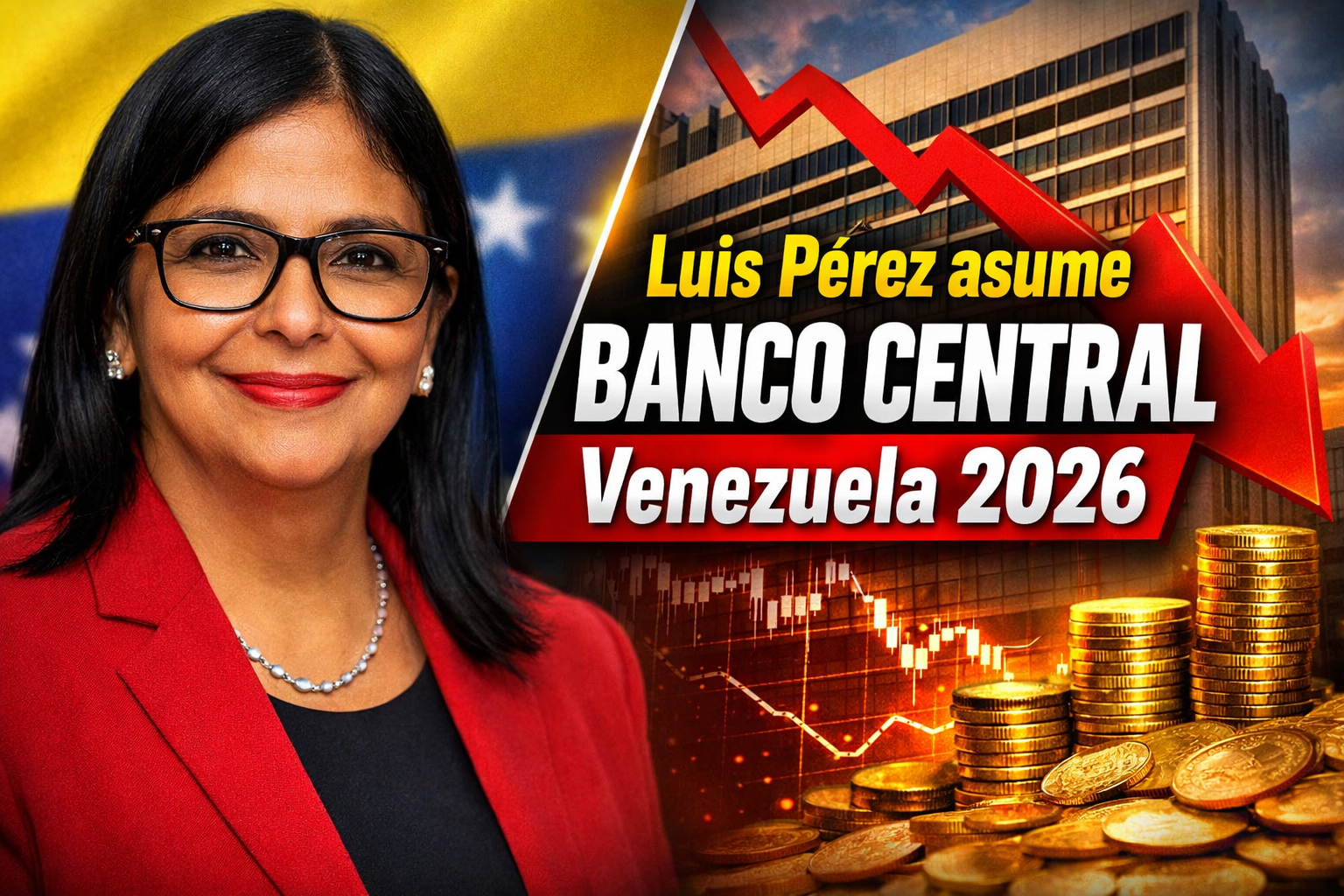
Venezuela’s economic saga took another dramatic turn this year when Luis Pérez stepped into the role of Central Bank president following Calixto Guerra’s unexpected resignation. In a nation long plagued by hyperinflation, currency collapse, and U.S. sanctions, this leadership shift signals potential recalibrations in monetary policy amid mounting pressures from both domestic unrest and global oil markets. As Pérez assumes control in 2026, observers are dissecting the move for clues on whether it heralds stability or more turbulence. This article unpacks the backstory, Pérez’s profile, and the stakes involved, blending fresh analysis with hard data on Venezuela’s fiscal woes.
Antecedentes de la renuncia de Calixto Guerra
Calixto Guerra’s exit from the Banco Central de Venezuela (BCV) wasn’t entirely shocking, but its timing amplified the drama. Guerra, appointed amid the Maduro regime’s tightening grip, had navigated a treacherous landscape since taking the helm three years prior. His tenure coincided with a fragile dollarization experiment, where the bolívar’s value plummeted despite partial adoption of the U.S. dollar in everyday transactions.
Guerra’s resignation letter cited «personal reasons,» but insiders point to deeper frictions. Reports emerged of clashes with Finance Minister Simón Zerpa over aggressive money printing to fund social programs, exacerbating inflation that hit 150% annually by late 2025. External factors loomed large too: U.S. sanctions intensified after Venezuela’s disputed 2024 elections, choking oil exports—still 90% of government revenue. Guerra publicly advocated for gradual de-dollarization, but critics accused him of enabling the regime’s fiscal deficits, which ballooned public debt to over $150 billion.
Factores que precipitaron la salida
The tipping point came in early 2026 when oil prices dipped below $60 per barrel due to global oversupply from Middle Eastern producers and U.S. shale booms. Venezuela’s production, hovering at 800,000 barrels per day, generated just $25 billion in exports—down from $40 billion peaks in prior years. Guerra’s inability to stem black-market dollar rates, which traded at 50 bolívares per greenback officially versus 5,000 informally, eroded his credibility. Maduro’s inner circle, facing street protests over food shortages, sought a scapegoat. Guerra’s departure clears the deck for a more aligned figure.
Perfil de Luis Pérez: El nuevo timonel del BCV
Luis Pérez, a 52-year-old economist with roots in Caracas’s academic circles, brings a blend of technocratic savvy and regime loyalty. Educated at the Universidad Central de Venezuela with a master’s from the London School of Economics, Pérez cut his teeth at PDVSA, the state oil giant, during its pre-crisis glory days. He later advised on currency controls under Nicolás Maduro’s early administration.
Unlike Guerra’s more orthodox bent, Pérez is known for pragmatic interventions. In his last role as deputy finance minister, he spearheaded a 2024 bond swap that shaved $2 billion off short-term debt maturities. Allies praise his data-driven style; detractors label him a «chavismo lifer» for defending price controls that stifle private enterprise.
Trayectoria y fortalezas clave
Pérez’s resume shines in crisis management. During the 2018-2020 hyperinflation peak, when rates soared past 1 million percent, he consulted on parallel exchange mechanisms that stabilized imports briefly. His publications in local journals advocate «sovereign monetarism,» blending Keynesian stimulus with resource nationalism. With Maduro’s endorsement, Pérez inherits a BCV balance sheet riddled with illiquid assets, but his oil sector ties could unlock alliances with OPEC+ partners like Russia and Iran.
Implicaciones del nombramiento en el contexto venezolano
Pérez’s ascension isn’t just a personnel swap—it’s a pivot point for Maduro’s survival strategy. Politically, it reassures hardliners wary of liberalization whispers from opposition figures like María Corina Machado. Economically, it tests whether Venezuela can claw back from a GDP contraction of 75% since 2013.
Internationally, the U.S. and EU watch closely. Pérez has signaled openness to dialogue, potentially easing sanctions if Caracas commits to electoral reforms. Yet, his appointment risks alienating IMF reformers, as Venezuela remains barred from loans due to arrears exceeding $4 billion.
Tabla: Comparación de perfiles – Guerra vs. Pérez
| Aspecto | Calixto Guerra | Luis Pérez |
|---|---|---|
| Experiencia principal | BCV interno, política monetaria estricta | PDVSA, finanzas públicas, swaps de deuda |
| Enfoque en inflación | Dollarización parcial, freno a emisión | Monetarismo soberano, controles selectivos |
| Relación con Maduro | Tensiones crecientes | Lealtad probada, alineación ideológica |
| Producción petrolera bajo mandato | Estancada en 750k-850k barriles/día | Potencial para alianzas OPEC+ |
| Deuda pública manejada | Aumentó 20% anual | Redujo maturidades cortas en $2B |
Panorama económico de Venezuela bajo presión
Venezuela’s economy remains a cautionary tale. Hyperinflation has eased from apocalyptic highs, but core issues fester. Reserves stand at a meager $12 billion, mostly gold, covering just two months of imports. Unemployment idles at 20%, while remittances from 7 million expatriates prop up 15% of GDP.
Oil dependency defines the picture: despite vast Orinoco Belt reserves (300 billion barrels), sanctions and mismanagement cap output. Food insecurity affects 40% of households, per local surveys, fueling migration waves.
Estadísticas clave de la economía venezolana (2025-2026)
- Inflación anual: 150% (2025), proyectada en 80% para 2026 bajo Pérez.
- PIB nominal: $95 mil millones, con contracción real del 5% en 2025.
- Reservas internacionales: $12 mil millones (bajo vs. $30 mil millones pre-crisis).
- Exportaciones petroleras: $25 mil millones (80% del total).
- Deuda externa: $150 mil millones, 60% en default.
- Tasa de cambio paralelo: 5,000 bolívares por dólar.
These figures underscore Pérez’s tightrope: stimulate growth without reigniting inflation.
Posibles cambios en la política monetaria
Expect Pérez to prioritize oil revival. He may push Petrocaribe debt restructurings with Caribbean allies, freeing $1-2 billion. On currency, partial dollarization persists, but Pérez could introduce a «bolívar digital» backed by crypto-oil futures, echoing El Salvador’s bitcoin play.
Fiscal restraint seems unlikely; subsidies for fuel (at 1 cent per liter) drain 10% of GDP. Yet, Pérez’s PDVSA links might lure Chinese investment, already at $60 billion committed. Risks abound: looser money could spike inflation anew, while austerity sparks riots.
Escenarios probables para 2026-2027
Optimistic path: Oil hits 1 million bpd, inflation halves, GDP grows 3%. Pessimistic: Sanctions tighten, blackouts worsen, exodus accelerates.
Reacciones y perspectivas futuras
Maduro hailed Pérez as a «revolutionary economist,» while opposition decried «more of the same.» Markets dipped 2% on the announcement, with bolívar weakening 5%. Internationally, Colombia’s Petro administration offered mediation, eyeing border trade.
Business lobbies like Fedecámaras urge transparency in reserves audits. Pérez’s first presser hinted at «pragmatic orthodoxy,» but trust remains low amid corruption scandals claiming 30% of PDVSA revenues.
Looking ahead, 2026 elections loom. Pérez’s success hinges on oil price rebounds—forecast at $70/barrel—and U.S. policy shifts post-Trump era. Failure could topple Maduro; triumph might legitimize chavismo anew.
Conclusión: Un nombramiento con apuestas altas
Luis Pérez’s takeover at the BCV marks a critical juncture for Venezuela. Bridging regime loyalty with economic realism, he faces inherited chaos but wields oil leverage. Stakeholders from Washington to Beijing will gauge his moves closely. For ordinary Venezuelans enduring lines for basics, the real test is delivery: can Pérez deliver stability in a nation that’s defied it for decades? As 2026 unfolds, this appointment could redefine Latin America’s most volatile economy—or deepen its spiral.

Allison Walsh es periodista y redactora especializada en noticias internacionales y actualidad digital. Con un enfoque en información clara y verificada, cubre temas globales para mantener a los lectores informados con contenido confiable y relevante.